
Luoyi is the oldest name of Luoyang, tracing back to the early 11th century BC in the Western Zhou Dynasty. An ancient proverb states that Luoyi stands at the geographical heart of the realm. It is recognized as the earliest place bearing the name “China”. After conquering the Shang Dynasty, King Wu of Zhou commissioned Duke Zhou Dan to construct Luoyi for governing eastern lands. The city consisted of the Royal City in the west and Chengzhou in the east, jointly serving as the secondary eastern capital of Western Zhou.
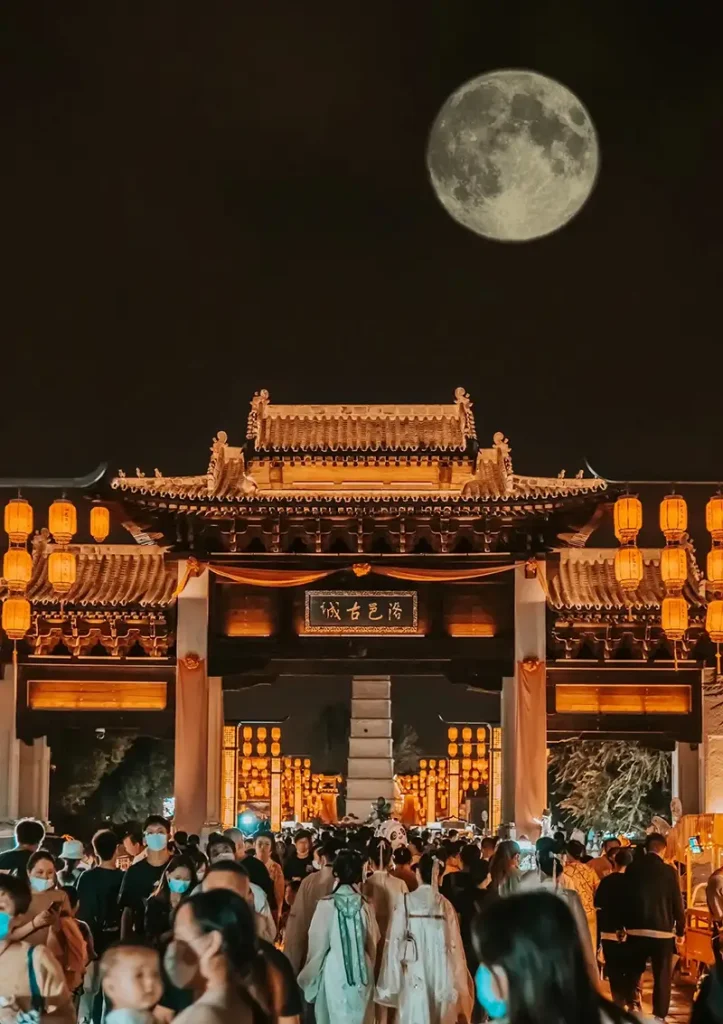
Core Zone of the Thirteen-Dynasty Capital
From the Zhou to the Tang Dynasty, Luoyang acted as the capital of thirteen dynasties. The old town where Luoyi Ancient City locates remained the political and cultural heart throughout history.
- Western Zhou: Chengzhou functioned as the eastern capital and a cradle of ritual and music civilization.
- Eastern Zhou: The imperial court moved eastward, making Luoyi the national capital.
- Han and Wei Dynasties: Confucianism and Buddhism flourished here while Luoyang served as the imperial seat.
- Sui and Tang Dynasties: Luoyang was titled the eastern or divine capital. As a vital hub of the Grand Canal, it prospered as an international metropolis. The present ancient city area once housed bustling residential quarters and Xintan Wharf, a major port along the Sui-Tang Grand Canal.
- Jin, Yuan, Ming and Qing Dynasties: The city scope gradually narrowed. Landmarks including Wenfeng Pagoda, Confucian Temple and Tuoling Palace were erected, shaping the layout of the ancient old town.
Living Relic of Overlapping Historical Sites
- Wenfeng Pagoda: Initially built in the Northern Song Dynasty and reconstructed in the Qing Dynasty, it symbolizes prosperous literary fortune.
- Henan Prefectural Confucian Temple: A sacred venue for Confucian worship and heritage inheritance.
- Tuoling Palace: A precious relic dating back to the Three Kingdoms period.
- Four-Eye Well: An ancient well witnessing local people’s daily life for thousands of years.
- Jin-Yuan City Wall Ruins: Layered ramparts reflecting the evolution of Luoyang urban construction.
- Xintan Wharf Ruins: Unearthed after 2010, it proves Luoyang’s status as a key ferry in the Central Plains.
Home to Essence of Chinese Civilization
It stands as the core birthplace of Heluo culture, origin of ancient classics and ceremonial systems. The city nurtures distinctive literary styles, metaphysical thoughts and early Buddhism culture. Boasting the prosperity of the Tang imperial capital, it served as the eastern starting point of the ancient Silk Road and attracted numerous renowned poets. Traditional folk arts and crafts such as Heluo drum storytelling, tri-color glazed pottery, peony culture and Hanfu customs are well preserved here.
Opened to visitors free of charge in 2017, the scenic area features restored architectures styled from the Tang to Qing Dynasty centered around Wenfeng Pagoda.