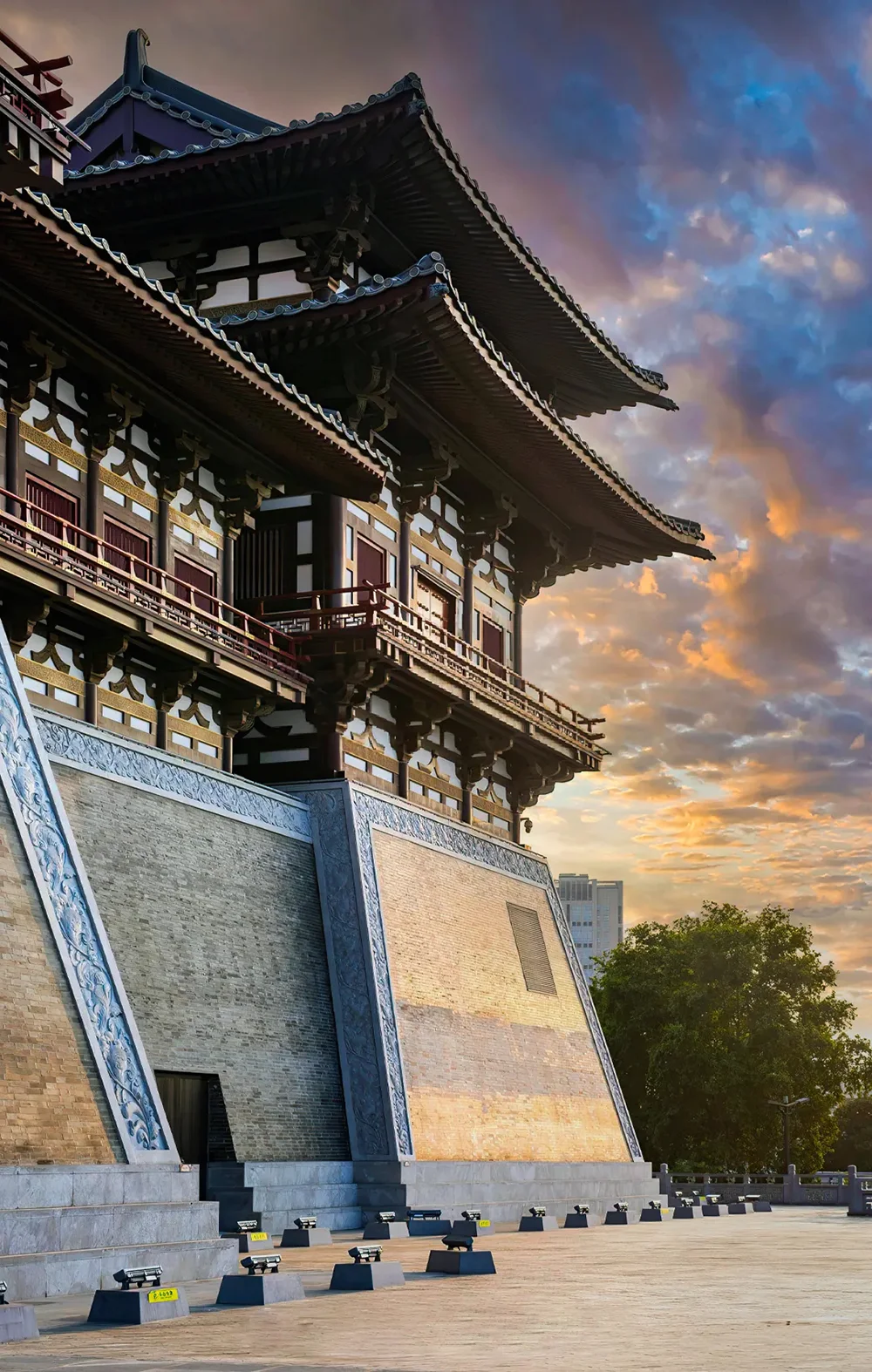
Yingtian Gate is a world-famous historical relic situated in Luoyang, central China’s Henan Province. Its construction dates back to 605 AD, the first year of the Daye reign of the Sui Dynasty. Initially named Zetian Gate, it was renamed Yingtian Gate in the early Tang Dynasty.

As the front gate of the imperial palace of Sui-Tang Luoyang, it enjoyed supreme status in ancient Chinese architecture. Its distinctive double-sided three-outlook que design set a model for later imperial gates, and the design of the Meridian Gate in the Forbidden City of Beijing drew inspiration from it.

During the reign of Emperor Gaozong and Empress Wu Zetian, Yingtian Gate became the venue for the most important national ceremonies. Envoys from countries across Asia gathered here to pay tribute, recording the prosperity and international influence of the Tang Empire.

The gate remained in service from the Sui Dynasty to the Northern Song Dynasty, spanning over 500 years. After long-term wars and natural damage, the ancient structure gradually collapsed. At present, the site has been well preserved and restored. The modern Yingtian Gate Scenic Area and Ruins Museum display unearthed cultural relics and original foundation sites, allowing visitors to experience the glory of the Sui and Tang empires up close.