
History of Kaifeng
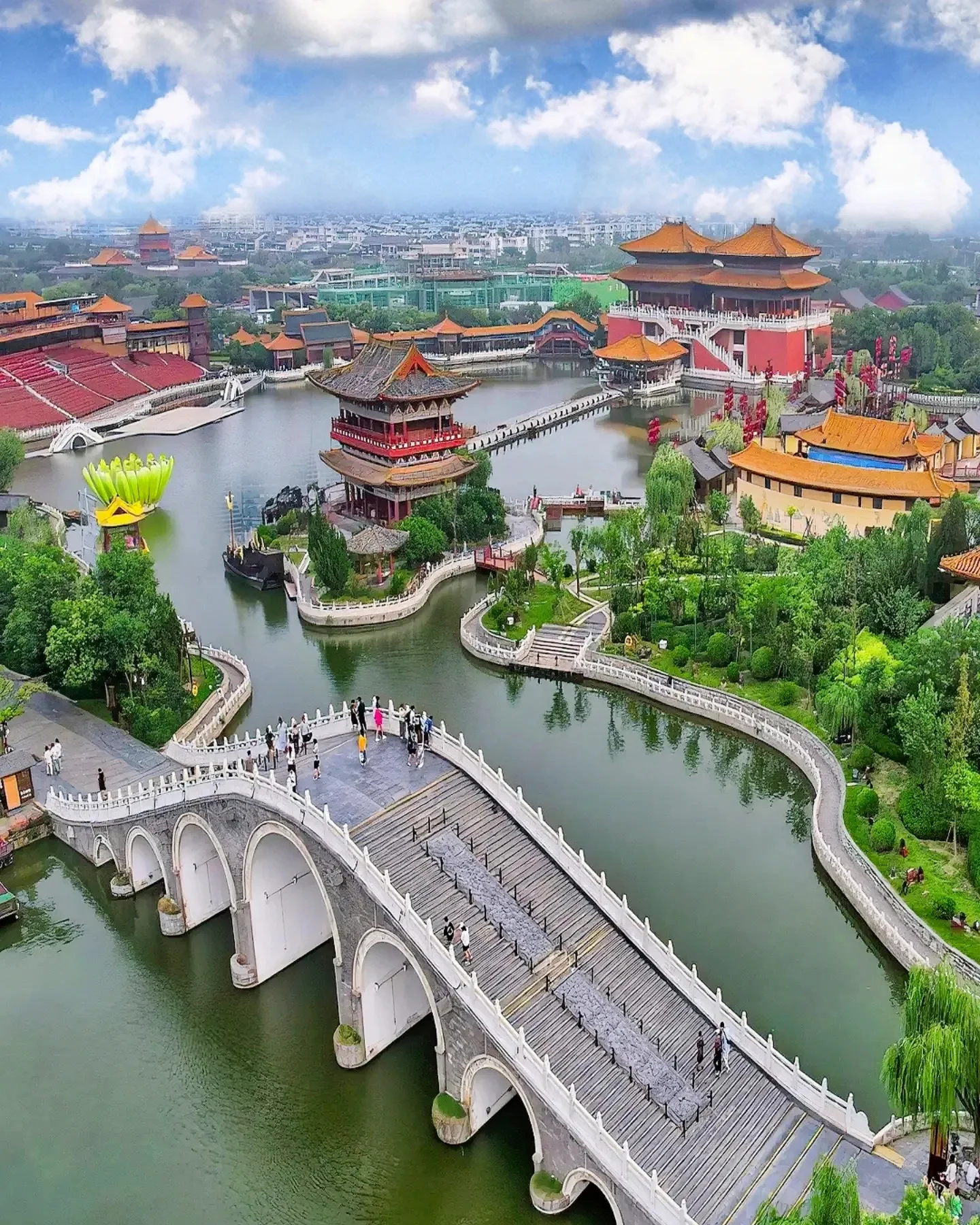
Kaifeng is among China’s first batch of National Famous Historical and Cultural Cities, renowned as an ancient capital of eight dynasties. With a city-building and capital history spanning over 4,100 years, it served successively as the imperial capital for the Xia Dynasty, the State of Wei during the Warring States Period, the Later Liang, Later Jin, Later Han and Later Zhou of the Five Dynasties, as well as the Northern Song and Jin dynasties.

Especially in the Northern Song Dynasty, Kaifeng stood as the world’s largest metropolis at that time. It nurtured the far-reaching Song Culture, which inherited the essence of the Han and Tang dynasties and laid a foundation for the Ming and Qing dynasties. Since the Song Dynasty, successive dynasties have regarded Kaifeng as a regional economic and cultural hub in northern China.

Over thousands of years, the diligent and intelligent people of Kaifeng have created a splendid array of cultures, including imperial court culture, government mansion culture, patriotism culture, religious culture, folk custom culture, garden culture, catering culture, chrysanthemum culture, opera culture and calligraphy culture.

Throughout history, Kaifeng has nurtured numerous eminent figures: Jiao Yulu, a model county Party secretary; the impartial Judge Bao; the loyal and valiant Yang Family Generals; national hero Yue Fei; reformer Wang Anshi; Lord Xinling who rescued Zhao from the Qin invasion; painter Zhang Zeduan; litterateur Cai Yong; poet Ruan Ji; educator Lin Boxiang; historian Fan Wenlan; and great philosopher Feng Youlan.

